
Why Your Wedding Photos Don’t Look Like Pinterest (And Why That’s a Good Thing)
&layout=none&ref=https://www.steveherlihyphotography.com/blog/2026/4/why-your-wedding-photos-don-t-look-like-pinterest-and-why-that-s-a-good-thing)
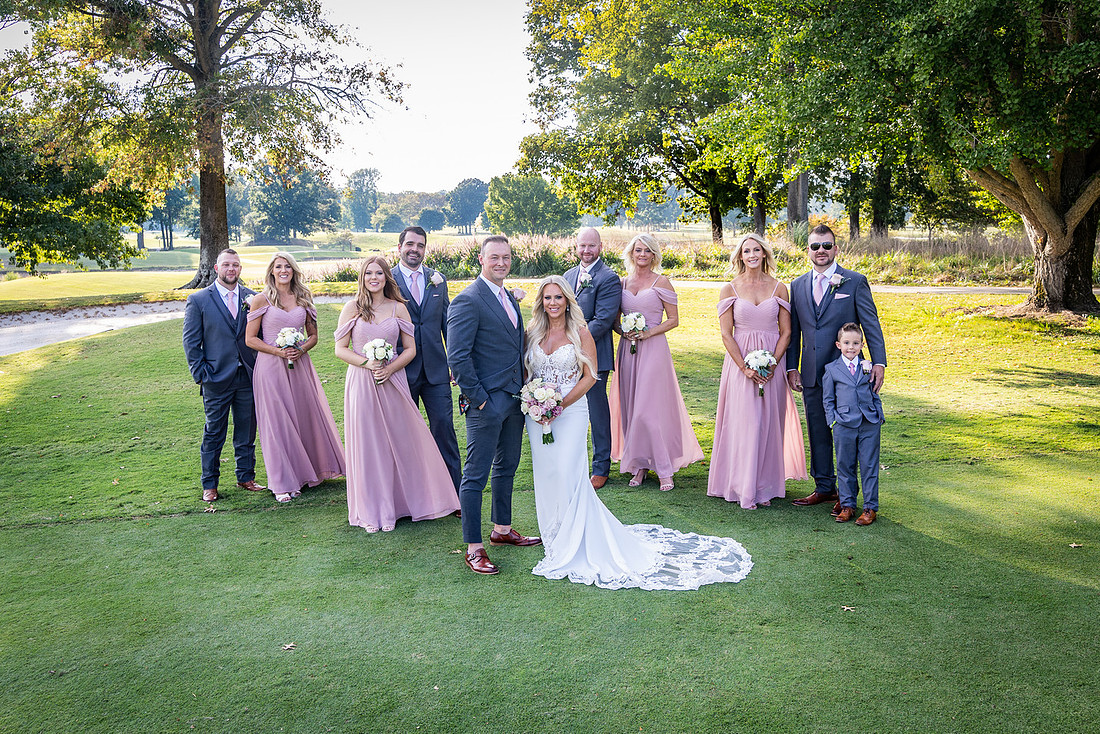

At some point during wedding planning, Pinterest quietly becomes the reference point. It starts as inspiration and then, without much warning, turns into a standard. Certain images stick. A perfectly backlit couple in an empty field. A first look that feels cinematic. A reception that looks like it was staged for a magazine.
Then the wedding happens. The photos come back. And there’s a moment, sometimes subtle, sometimes not, where the comparison begins.
Why doesn’t this look like that?
It’s a fair question. It’s also based on a misunderstanding of how those images are made.
Pinterest Is a Highlight Reel, Not a Baseline
Most of the images that circulate on Pinterest are not typical wedding moments. They’re outliers.
Some are styled shoots where nothing is rushed, no guests are waiting, and every detail is placed with intention. Others are taken under very specific conditions. Ideal light, controlled environments, and time that most real timelines don’t allow.
Even when the photos are from actual weddings, they represent a fraction of the day. A few frames out of thousands, selected because everything aligned for a second.
That doesn’t make them unrealistic. It just means they’re not the average.
Expecting an entire gallery to feel like a collection of best-case moments sets up a comparison that doesn’t quite hold.
Real Weddings Are Messier Than They Look Online
A wedding day moves quickly. People run late. Family dynamics show up. Weather shifts. Light changes from room to room. The timeline stretches and compresses without warning.
None of this is a problem. It’s just reality.
Pinterest images rarely show that context. They isolate a clean moment and remove everything around it. No crowd. No distractions. No urgency.
In a real setting, there are guests watching, coordinators adjusting schedules, and a dozen small things happening at once. That environment shapes how people move and how they look on camera.
It also makes the day feel alive, which is something Pinterest can’t really capture.
Those “Effortless” Photos Usually Aren’t Effortless
The images that look most natural online are often the result of very specific conditions.
Good light. Enough time. A couple that has settled into the moment. A photographer who knows when to step in and when to leave things alone.
Remove any one of those and the image changes.
This is why trying to recreate a specific Pinterest shot often falls flat. The variables behind that image aren’t visible. What you’re seeing is the outcome, not the setup.
Even experienced wedding photographers in Nashville TN will tell you the same thing. You can aim for a feeling, but copying a frame rarely works the way people expect.
Your Wedding Isn’t Meant to Look Generic
Here’s the part that usually gets overlooked.
If your wedding photos matched Pinterest perfectly, they would also look like a lot of other weddings.
Same poses. Same compositions. Same visual language.
That consistency is part of why those images spread so easily. They’re familiar.
Real weddings have their own rhythm. The way people interact. The way the day unfolds. The small moments that don’t exist anywhere else.
Those things don’t always translate into “perfect” images in the Pinterest sense. They translate into specific ones.
And specific tends to age better than perfect.
What Actually Makes Photos Hold Up Over Time
The images people come back to years later are rarely the most stylized ones.
They’re the ones that feel accurate.
A look that wasn’t staged. A moment that wasn’t interrupted. A frame where nothing is trying too hard.
That kind of image doesn’t compete for attention. It holds it quietly.
At Steve Herlihy Photography, the focus stays on that kind of consistency. Not chasing a reference image, but paying attention to what’s actually happening in front of the camera.
Working as a photographer in Nashville TN means seeing a wide range of weddings. Different venues, different timelines, different personalities. The common thread in the strongest galleries is not perfection. It’s presence.
The Comparison That Doesn’t Help
It’s easy to compare your full gallery to a collection of curated highlights online. It’s also not a fair comparison.
One is a real day, documented as it unfolded. The other is a filtered set of moments chosen because they meet a very specific aesthetic.
When you step back from that comparison, something shifts.
The question changes from “Why doesn’t this look like Pinterest?” to “Does this feel like our day?”
That’s a better standard.
Because in the end, the value of wedding photography isn’t in how closely it matches something you saved months ago.
It’s in whether it still feels like yours years later.